

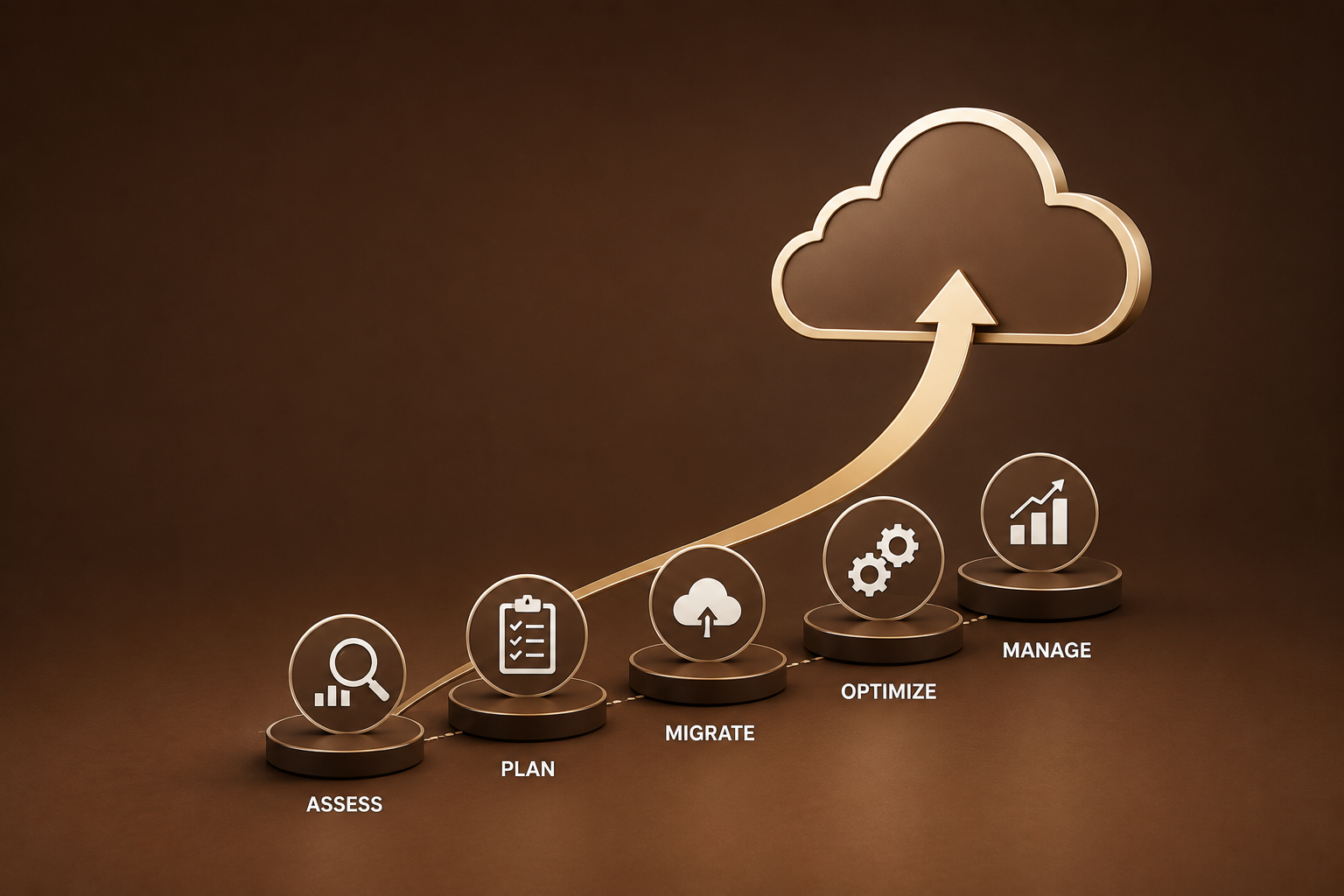
Migrating enterprise workloads to the cloud remains one of the most complex undertakings an IT organization can attempt, involving not just technical execution but also organizational change management, cost planning, and risk mitigation. Enterprises that approach migration without a clear strategy frequently encounter cost overruns, extended timelines, and business disruption. This guide outlines a comprehensive framework for planning and executing enterprise cloud migration.
Why Enterprises Migrate to the Cloud
Organizations pursue cloud migration for a variety of interconnected reasons. Reducing capital expenditure on physical infrastructure in favor of operational, consumption-based spending is often the initial financial driver. Beyond cost, cloud migration typically offers improved scalability, allowing organizations to expand or contract infrastructure capacity in response to actual demand rather than provisioning for peak capacity year-round. Many enterprises are also motivated by the desire to modernize aging infrastructure, improve disaster recovery capabilities, and gain access to advanced cloud-native services like managed databases, machine learning platforms, and analytics tools that would be costly and complex to replicate on-premises.
The Six Common Migration Strategies
Enterprise cloud migrations typically follow one or a combination of six recognized approaches, often referred to as the “6 Rs” of migration:
Rehosting (“lift and shift”) involves moving applications to the cloud with minimal or no modification, essentially replicating the existing on-premises architecture on cloud infrastructure. This approach offers the fastest migration timeline but often fails to take advantage of cloud-native efficiencies, potentially resulting in higher ongoing costs than a more optimized approach would achieve.
Replatforming involves making limited optimizations during migration, such as moving from a self-managed database to a managed database service, without fundamentally re-architecting the application. This offers a middle ground between migration speed and long-term efficiency gains.
Repurchasing involves replacing an existing application with a cloud-native SaaS alternative, such as migrating from an on-premises CRM system to a cloud-based equivalent, effectively eliminating the need to migrate and manage the underlying infrastructure at all.
Refactoring (or re-architecting) involves substantially redesigning an application to take full advantage of cloud-native capabilities, such as breaking a monolithic application into microservices or adopting serverless architecture. This approach typically requires the most significant investment but can deliver the greatest long-term benefits in scalability, resilience, and cost efficiency.
Retiring involves decommissioning applications that are no longer needed, which is a valuable outcome of the migration assessment process even though it doesn’t involve moving anything to the cloud at all. Many enterprises discover during migration planning that a meaningful percentage of existing applications are redundant, underutilized, or entirely obsolete.
Retaining involves keeping certain applications on-premises, either temporarily or permanently, due to technical constraints, regulatory requirements, or the assessment that cloud migration would not provide sufficient benefit relative to the migration cost and risk involved.
Building a Migration Roadmap
Phase 1: Assessment and Discovery
Before any migration activity begins, enterprises need a comprehensive inventory of existing applications, infrastructure dependencies, and data flows. This discovery phase often reveals undocumented dependencies between systems that significantly affect migration sequencing and complexity. Automated discovery tools can help accelerate this process for large, complex environments where manual documentation would be impractical.
During this phase, organizations typically categorize each application according to the six migration strategies described above, prioritizing based on business criticality, technical complexity, and expected benefit.
Phase 2: Business Case and Planning
With a clear picture of the application portfolio, enterprises develop a detailed business case that outlines expected costs, timelines, and benefits for the migration effort. This typically includes total cost of ownership comparisons between current on-premises costs and projected cloud costs, factoring in both direct infrastructure costs and the operational costs of managing the transition.
Planning also involves selecting the target cloud provider or providers, determining the migration sequence, and establishing governance structures to oversee the effort, including clear decision-making authority for architecture choices and budget approval.
Phase 3: Pilot Migration
Rather than attempting to migrate an entire application portfolio simultaneously, most successful enterprise migrations begin with a pilot phase involving a small number of lower-risk applications. This pilot serves multiple purposes: validating the chosen migration approach and tooling, building organizational confidence and expertise, and surfacing unexpected challenges before they affect business-critical systems.
Phase 4: Full-Scale Migration Execution
Following a successful pilot, organizations proceed to migrate the remaining application portfolio according to the prioritized sequence established during planning. This phase typically involves multiple migration waves, each targeting a related group of applications, with dedicated testing and validation periods between waves to confirm successful migration before proceeding to the next group.
Phase 5: Optimization and Governance
Migration doesn’t end when an application successfully runs in the cloud. Post-migration optimization involves rightsizing resources based on actual usage patterns, implementing cost management practices, and, for applications initially rehosted with minimal changes, potentially pursuing further refactoring to capture additional cloud-native efficiencies over time.
Key Risk Factors and Mitigation Strategies
Data Migration Complexity
Moving large volumes of data, particularly for applications with strict consistency or availability requirements, represents one of the most technically challenging aspects of enterprise migration. Strategies to mitigate this risk include using dedicated data migration tools designed for large-scale transfers, planning for adequate migration windows, and implementing thorough data validation processes to confirm data integrity following migration.
Application Interdependencies
Complex enterprise environments often include applications with intricate dependencies on other systems, databases, and network configurations that aren’t always fully documented. Inadequate dependency mapping can lead to unexpected outages when a dependent system is migrated before the applications relying on it are ready. Thorough discovery and dependency mapping during the assessment phase significantly reduces this risk.
Skill Gaps
Cloud migration requires expertise that many enterprise IT teams, accustomed to managing on-premises infrastructure, may not initially possess. Organizations often address this gap through a combination of training existing staff, hiring cloud-experienced personnel, and engaging migration consulting partners for particularly complex projects.
Security and Compliance Continuity
Migrating to the cloud requires ensuring that security controls and regulatory compliance requirements continue to be met throughout and after the migration process. This often requires close collaboration between migration teams and security/compliance stakeholders from the earliest planning stages, rather than treating security as an afterthought once technical migration is complete.
Business Disruption
Even well-planned migrations carry some risk of disrupting business operations during cutover periods. Mitigation strategies include scheduling migrations during lower-traffic periods, maintaining rollback plans in case of unexpected issues, and conducting thorough testing in the target cloud environment before finalizing the cutover.
Cost Management During Migration
Migration projects often involve a period of running duplicate infrastructure — both the legacy on-premises environment and the new cloud environment — which can temporarily increase costs before the migration is complete and the legacy infrastructure can be decommissioned. Enterprises should budget explicitly for this transition period rather than assuming costs will immediately decrease upon beginning migration.
Additionally, migration itself often incurs direct costs beyond ongoing cloud infrastructure spend, including data transfer costs, migration tooling licenses, and potentially consulting or professional services fees for complex migrations.
Choosing Between Single-Cloud and Multi-Cloud Approaches
Some enterprises pursue a multi-cloud migration strategy, distributing workloads across more than one cloud provider, often to avoid vendor lock-in, take advantage of specific providers’ strengths for particular workloads, or meet specific regulatory or business continuity requirements. While multi-cloud can offer these benefits, it also introduces additional complexity in terms of skill requirements, tooling, and governance, and organizations should carefully weigh these trade-offs rather than defaulting to multi-cloud without a clear strategic rationale.
Measuring Migration Success
Enterprises should establish clear success metrics before beginning migration, which typically include cost comparisons against the pre-migration baseline, application performance and availability metrics, and the achievement of specific business objectives that motivated the migration in the first place, such as improved scalability or faster feature deployment cycles. Regularly reviewing these metrics post-migration helps confirm whether the migration delivered the anticipated benefits and identifies areas requiring further optimization.
Cloud Migration Team Structure and Roles
Enterprise migrations typically require a dedicated cross-functional team rather than relying solely on existing infrastructure staff working the effort alongside their regular responsibilities. A migration program typically benefits from a program sponsor with sufficient organizational authority to resolve cross-departmental conflicts, a technical migration lead responsible for architecture decisions and overall execution quality, application owners who understand the business context and acceptance criteria for each migrated system, and dedicated security and compliance representatives who validate that migrated environments continue meeting regulatory obligations throughout the process.
Many enterprises also establish a cloud center of excellence during migration, a centralized team responsible for defining migration standards, reusable patterns, and governance policies that individual migration waves can follow, reducing the risk of each team independently reinventing architecture approaches and creating inconsistent, harder-to-manage environments once migration is complete.
Selecting the Right Migration Tooling
A wide range of specialized tools support different aspects of enterprise migration. Discovery and dependency mapping tools automatically scan existing infrastructure to build an inventory of applications, servers, and their interconnections, substantially reducing the manual effort otherwise required to document a large, complex environment. Migration execution tools, often provided natively by cloud providers, handle the actual replication and cutover of virtual machines, databases, or storage volumes to the target cloud environment. Testing and validation tools help confirm that migrated applications function correctly and meet performance expectations before production cutover.
Choosing appropriate tooling for each phase of migration, rather than relying entirely on manual processes, significantly reduces both the time required and the risk of errors during what is often already a complex and high-stakes undertaking. That said, tooling alone cannot substitute for careful planning and testing; even the most sophisticated migration tool cannot compensate for inadequate dependency mapping or insufficient validation before cutover.
Post-Migration Application Modernization
For many enterprises, the initial migration represents only the first step in a longer modernization journey. Applications that were rehosted with minimal changes to accelerate the initial migration timeline often become candidates for further refactoring once they’re running successfully in the cloud environment, allowing the organization to capture additional efficiency and scalability benefits over time without the pressure of an active migration deadline.
This phased approach, sometimes described as “migrate then modernize,” allows enterprises to realize the risk-reduction and infrastructure cost benefits of cloud migration relatively quickly, while pursuing more resource-intensive architectural improvements at a more measured pace based on business priority and available engineering capacity.
Vendor and Contract Negotiation During Migration
Enterprise migrations often coincide with significant contract negotiations, both with the target cloud provider and with existing on-premises infrastructure and software vendors. Organizations should approach cloud provider negotiations with a clear understanding of their anticipated usage patterns and growth trajectory, since providers are often willing to offer meaningful discounts or credits in exchange for committed spend or multi-year agreements, particularly for large enterprise migrations representing substantial revenue opportunity for the provider. At the same time, organizations need to carefully manage the wind-down of existing on-premises vendor relationships and software licensing agreements, ensuring termination clauses and timelines align with the actual migration schedule to avoid paying for redundant licensing or support during the transition period, or conversely, prematurely terminating agreements before the migration is fully validated and stable.
Conclusion
Successful enterprise cloud migration requires far more than simply moving applications from on-premises servers to cloud infrastructure. It demands a structured approach encompassing thorough assessment, careful strategy selection for each application, phased execution with adequate testing, and ongoing post-migration optimization. Enterprises that invest in comprehensive planning, realistic timeline and cost expectations, and strong governance throughout the process are significantly more likely to achieve the scalability, cost efficiency, and modernization benefits that motivated the migration in the first place.